Leg Length Differences
This is the fancy way of saying one leg is longer than the other. Often abbreviated to LLD (Leg Length Difference) this can cause a whole sweeping range of symptoms depending on how exactly it presents: pain in the feet, knees, hips or back; lack of coordination; fatigue; even tingling or numbness in the feet or legs.
Many folks have some form of LLD, although most of the time the difference is small enough that no one really notices and it is largely asymptomatic. Some children develop leg length differences during growth that they can equally grow out of as they continue maturing. Surgery, injury, or inherited conditions can also cause LLDs.
There are two main types of leg length differences: Structural and Functional.
Structural - where one leg is physically shorter than the other. This type of difference is usually in the long bones of the thigh or calf, where one side is simply shorter than the other.
In this case a lift is typically used under the shorter leg to even out the LLD. In smaller length differences this can be a flat piece of material or a wedge that goes underneath the heel of the insole inside the shoe. This is a minimally invasive, easy to modify alteration, that can also be transferred from shoe to shoe. It does however take up space inside the shoe, typically one can only get away with about a 6mm lift inside a shoe before you start to run out of space for your foot!
In the case of larger LLD an external shoe lift is used. Here, the sole of the shoe on the shorter leg is removed, a filler material is added to the shoe, then the original sole is reattached. Kind of like a shoe lift sandwich with the original parts of the shoe acting as the bread and the lift itself being the tasty fillings. The downside is that this kind of lift tends to be more labour intensive, difficult to modify, and it is attached to just one pair of shoes. If you want to wear multiple different pairs of shoes, each pair would need this type of modification.
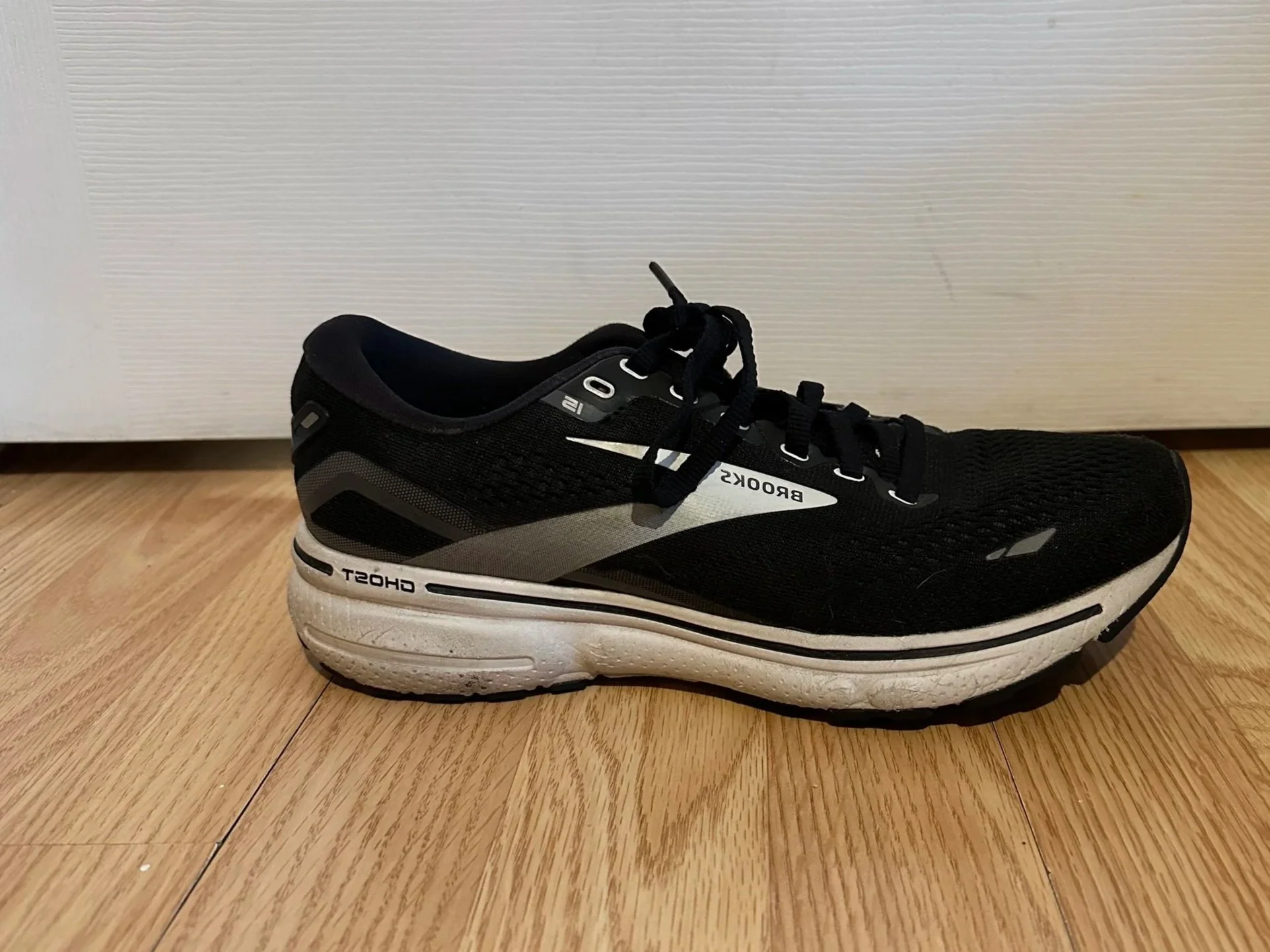
A Brooks Ghost running shoe with no external lift.
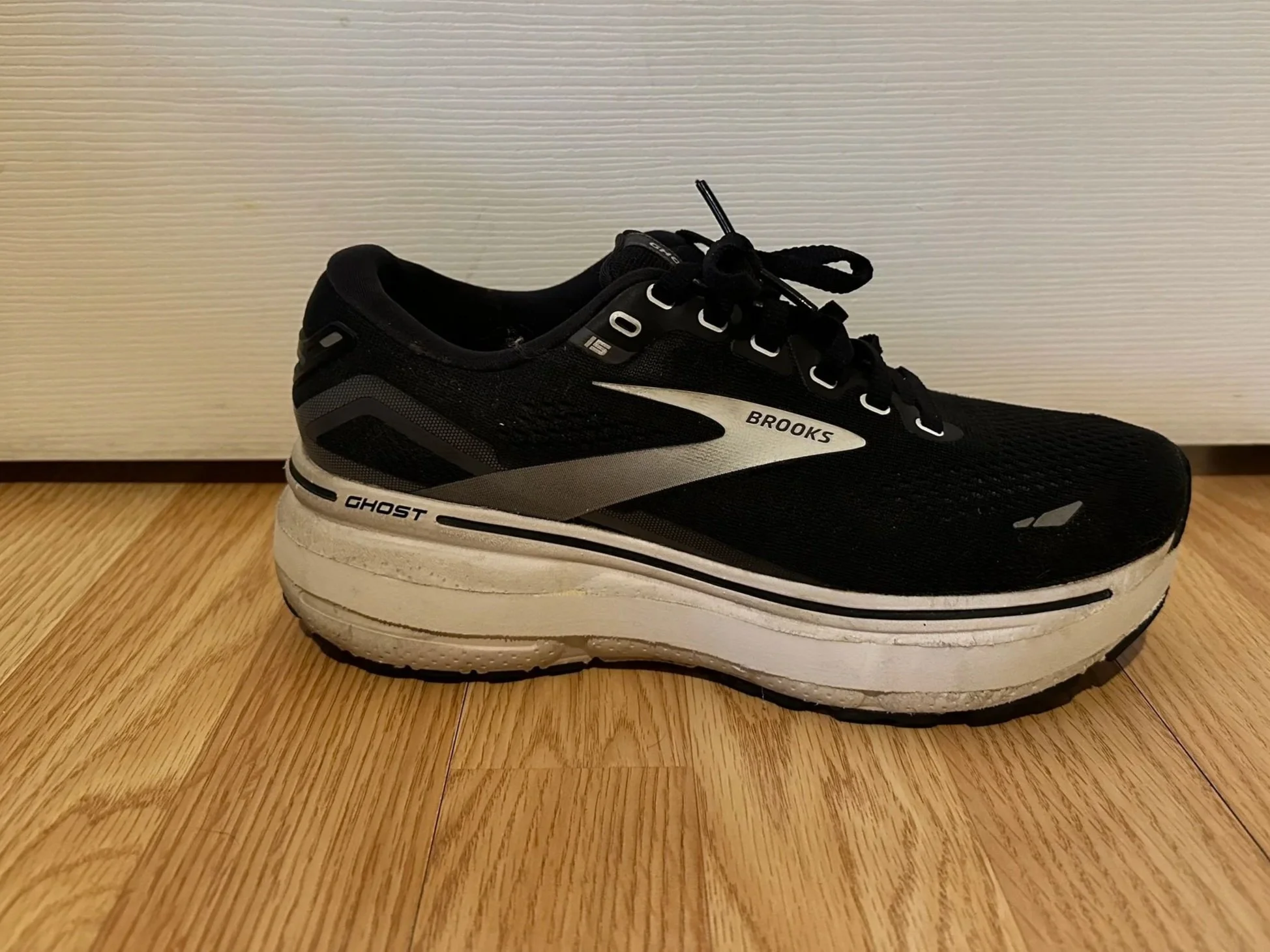
A Brooks Ghost running shoe with a 12mm external lift. The original sole has been preserved, with the lift material being sandwiched between the shoe upper and the sole.
One notable aspect of lifts is that, as a pedorthist, I am less concerned with fully correcting out a LLD than I am with finding the amount of correction that is comfortable and practical for my client. If someone has been dealing with a 12mm LLD untreated for decades, putting a full 12mm lift under them might cause more problems than it fixes. A pedorthist works with their client to find what is most appropriate and effective for their specific needs.
Functional - where one leg behaves like it is shorter than the other. There are a few different ways this can present.
One foot may have a lower or more flexible arch than the other, essentially squashing down more during weight bearing and thus behaving like a shorter limb. A pair of custom orthotics with appropriate arch and heel support can help both feet function more similarly and reduce or eliminate a functional leg length distance while the orthotics are worn.
Alternatively, the hip or buttocks muscles may be tight or lack the flexibility to fully allow the thigh to extend. In the case of muscle tightness, weakness, or limited flexibility a pedorthist would typically recommend seeing a physiotherapist or registered massage therapist to help with these specific root causes.